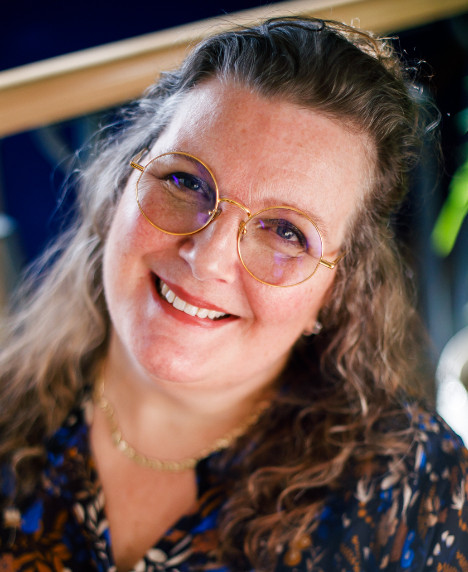
Annemiek van Dijke, PhD
Annemiek is affiliated with PsyQ Online Mental Health as a clinical neuropsychologist, clinical psychologist, psychotherapist, and supervisor with a focus on Nature- and Animal-Assisted Online therapy for depression, trauma & dissociation, and somatic symptom disorders/ FNS-FCS. Annemiek chairs the Network for Antrozoology and Green Psychology at the Netherland Institute for Psychologists (NIP). Annemiek is affiliated as a senior researcher with the Leiden University Medical Centre/ National ehealth Living Lab, with PsyQ Parnassia Group, and as co-promotor for several PhD projects with Open University. She was affiliated for a period of 5 years as an associated professor at Free University (VU) Amsterdam. She (co-)authored/ edited (inter)national peer-reviewed publications and book chapters. She presented/ chaired (inter)national keynotes, and workshops. She has been active for many years as a senior lecturer/ director in the training of certified mental health psychologist (GZ-psycholoog) and – specialists in clinical (neuro)psychology (KP/KNP) and psychotherapy (PT) including but not limited to RINOGROEP and RINO Amsterdam. Annemiek was awarded for her research and clinical innovations by the International Society for the Study of Trauma and Dissociation (ISSTD; Fellow & Paul Caul award) and served as treasurer and congress committee member for the European Society for Trauma and Dissociation (ESTD).
Abstrat:
Childhood adverse experiences such as psychological- of medical trauma, may result in symptoms that extend the classic symptoms of PTSD. Self dysregulation lies at the heart of these symptoms. Three qualitatively different self-dysregulation styles have been recognized: Inhibitory, Excitatory, and combined inhibitory and excitatory (IE) regulation operating in self-sustaining networks. These self-regulation styles can be recognized in animals and in humans. Results from research on equine-assisted trauma therapy will be presented.
Also, pets sense the impact of self-dysregulation in humans. Pets can be helpful in either down- or upregulating their human to homeostasis of the self, they may help solve interpersonal approach-avoidance conflicts in the therapeutic relationship, may help ground the body and the mind. Although trauma therapy is well researched, not all patients seem to benefit equally from therapy. Online therapy with pets (as full treatment or in addition to certified AAS) may help overcome problems like transfer failures of change processes from therapy-room to target situation, e.g., home environment. Therapy is performed where the problems arise, the animal knows the patient and remains with the patient after each therapy session and after therapy termination as opposed to therapy with handlers’ animals who come and go with the handler. An outline of the online trauma therapy with pets’ protocol and some exercises will be presented.
Although, AAS has proven its effectiveness and clinical relevance, implementation of AAS in mental health is slow. First results regarding the inventory of AAS activities and implementation in the Netherlands will be presented.